
















































Ask a question
Dates are among the world's most ancient superfoods, but not all dates are created equal. When it comes to premium varieties, two names dominate the conversation: Ajwa and Medjool. One is revered in Islamic tradition as a prophetic food with near-mythical health properties. The other is celebrated globally as the "king of dates" for its extraordinary size, sweetness, and versatility. But which one truly deserves a place on your table — and in your daily wellness routine? This definitive comparison breaks down everything you need to know.
What Are Ajwa Dates? Origin, Taste, and Spiritual Significance
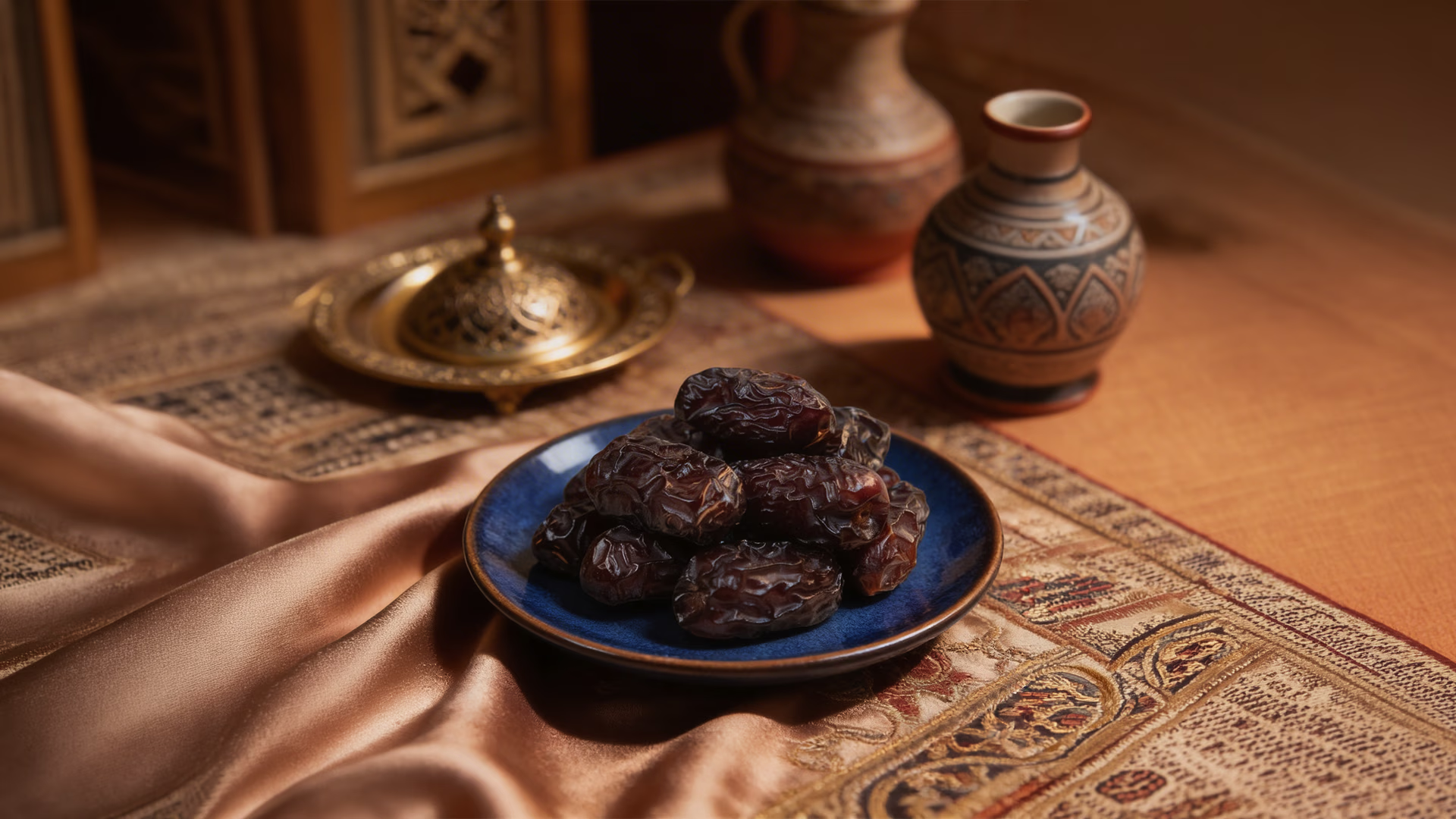
[Alt text: Ajwa dates from Madinah Saudi Arabia dark soft prophetic dates]
Ajwa dates are a distinctively dark, soft variety grown exclusively in Madinah, Saudi Arabia. Smaller and less visually dramatic than Medjool dates, Ajwa are immediately recognizable by their near-black color, slightly wrinkled skin, and dry-yet-tender texture. Their flavor profile is complex — less intensely sweet than Medjool, with subtle notes of prune, fig, and a faint earthy undertone.
What elevates Ajwa beyond culinary status is their profound significance in Islamic tradition. The Prophet Muhammad (ﷺ) is reported to have said: "Whoever eats seven Ajwa dates in the morning will not be harmed by poison or magic that day." (Sahih Bukhari). This hadith has made Ajwa dates a daily Sunnah practice for millions of Muslims worldwide, particularly during Ramadan and as a general health ritual.
What Are Medjool Dates? Origin, Taste, and Global Popularity
[Alt text: Medjool dates large caramel sweet variety Morocco California]
Originally cultivated in Morocco, Medjool dates are today grown across the Middle East, California, and Israel. They are the largest commercially available date variety — plump, glossy, and deeply caramel-colored, with a moist, almost toffee-like texture that makes them irresistible eaten fresh or incorporated into recipes.
Medjool dates are the world's most widely consumed premium date for good reason. Their rich, natural caramel sweetness makes them the go-to choice for:
Natural sweetener substitutes in baking and smoothies
Date energy balls and no-bake desserts
Stuffed date appetizers for entertaining
Healthy snacking straight from the pack
Their accessibility — available year-round in supermarkets globally — and bold flavor have made Medjool the default recommendation for anyone new to premium dates.
Ajwa vs Medjool Dates: Nutritional Comparison
Which Date Variety Packs a Greater Health Punch?
[Alt text: Ajwa vs Medjool dates nutritional comparison chart health benefits]
Both varieties are genuinely nutritious, but their profiles differ in meaningful ways:
Nutrient (per 100g) | Ajwa Dates | Medjool Dates |
Calories | ~277 kcal | ~277 kcal |
Natural Sugars | ~65g | ~66g |
Fiber | ~6.7g | ~6.7g |
Potassium | ~696mg | ~696mg |
Antioxidants | Very High | Moderate |
Selenium | Notable | Trace |
Anti-inflammatory compounds | Clinically studied | General |
The critical differentiator is antioxidant content. Multiple peer-reviewed studies — including research published in the Journal of Agricultural and Food Chemistry — have found that Ajwa dates contain exceptionally high levels of flavonoids, polyphenols, and anthocyanins compared to most other date varieties. These compounds are associated with cardiovascular protection, anti-inflammatory effects, and potential anticancer properties.
Medjool dates, while nutritionally solid, have not been the subject of the same depth of clinical research. They shine in fiber content and energy density, making them excellent for athletes and active individuals needing quick, sustained fuel.
Ajwa vs Medjool Dates: Price, Availability, and Value
[Alt text: Ajwa dates premium price vs Medjool dates supermarket value comparison]
This is where the two varieties diverge most dramatically for everyday consumers.
Ajwa dates are significantly more expensive, often retailing at 3–5 times the price of Medjool. Their higher cost reflects genuine scarcity — authentic Ajwa can only be grown in the specific microclimate of Madinah, and production volume is naturally limited. Beware of imitations: counterfeit or mislabeled "Ajwa" dates are common in global markets. Always purchase from reputable suppliers who can verify the Madinah origin.
Medjool dates offer exceptional value at their price point. Widely available in supermarkets, health food stores, and online retailers worldwide, they deliver premium taste and solid nutrition at an accessible cost. For daily culinary use — smoothies, baking, snacking — Medjool is the practical and economical champion.
Which Date Should You Choose? A Decision Framework
The answer depends entirely on your primary purpose:
Choose Ajwa dates if you:
Follow Islamic Sunnah practices and value prophetic foods
Are seeking maximum antioxidant and anti-inflammatory benefits
Want a lower-sugar option with a more complex flavor profile
Are purchasing as a meaningful gift for a Muslim family or during Ramadan
Choose Medjool dates if you:
Want a versatile everyday date for cooking, baking, and snacking
Are new to premium dates and want the most crowd-pleasing flavor
Need a natural sugar substitute in recipes
Are budget-conscious but unwilling to compromise on quality
The ideal solution? Keep both. Use Medjool dates for culinary creativity and daily snacking. Reserve Ajwa for your morning wellness ritual — 7 dates on an empty stomach, following the Sunnah — and experience the difference yourself.
Conclusion: The Ajwa vs Medjool debate doesn't need a single winner — both varieties represent the very best that the date palm has to offer, each excelling in different dimensions. Ajwa is unmatched in spiritual significance, antioxidant density, and medicinal tradition. Medjool is unrivaled in flavor accessibility, culinary versatility, and global availability. Understanding this distinction allows you to make an informed, purposeful choice rather than defaulting to whichever variety your supermarket stocks.